














When, Why and How to Switch 3PL Providers
Originally Published: 16 June 2025
Last Updated: 4 August 2025
Running a growing eCommerce business means making countless decisions about partners, systems, and processes. Your 3PL relationship is one of the most important, yet it’s often the one that receives the least attention once established.
However, as your business evolves, fulfilment needs to evolve with you. Strategies that worked swimmingly when you were shipping 200 orders a month might start showing cracks at 1,000 orders a month. Peak periods that used to feel manageable become stressful. Quality issues begin to seep into your reviews and reputation.
The first challenge is recognising when your current 3PL setup has become a constraint rather than an asset.
Most businesses endure a declining 3PL relationship for months or even years longer than they should, watching opportunities slip by.
“Better the devil you know,” right?
Well, luckily, not all 3PLs are the same. And here’s what we’ve learned from working with hundreds of thriving eCommerce businesses: the cost of staying with the wrong 3PL almost always exceeds the effort required to switch to the right one.
This guide explains when it makes sense to consider a change, what you can realistically expect from the process, and how to execute the transition without disrupting your operations.
In this article
Three Signs Your Current Setup Isn’t Working
The decision to switch 3PL typically develops over months of smaller griping issues that gradually escalate into serious problems.
Based on our experience, these three scenarios represent the most common reasons businesses ultimately decide to make a change:
1. Your Growth Has Outpaced Their Capacity
Growth is a huge test of any eCommerce business because it begs the question – can you handle it? What about your shipping processes?
If shipping becomes the bottleneck, you may find that orders that used to ship same-day now take 2-3 days. Peak periods that were busy but controlled spiral out of control and quality drops – maybe from 99% accuracy to 96%, which still sounds decent until you realise that means 40 customers out of every 1,000 get the wrong order.
J&J client Whites Beaconsfield discovered this when their TikTok video went viral. Order numbers skyrocketed practically overnight, with a significant number coming from the US. Without proper infrastructure in place, sudden spikes can overwhelm existing fulfilment setups.
This can also impact your 3PL relationship. Rather than “How can we help you grow?” it becomes about capacity. In this situation, some businesses onboard another 3PL partner rather than swapping, but that doubles admin and management and is risky in itself.
3PL relationships require confidence and trust, and if your growth negatively affects either, you may find yourself being more conservative with marketing and sales than you would with a more scalable partner.
2. Technology and Quality Issues Are Multiplying
Fulfilment is certainly not the semi-archaic process it once was, where sheets and paper invoices were exchanged between phones and fax machines.
Today, storefronts integrate with warehouse management systems, allowing for real-time inventory tracking updates and seamless shipping data flow between platforms. This has become a prerequisite to running a modern eCommerce business.
However, not every 3PL has kept pace with these expectations. You might find yourself dealing with:
- Inventory updates that arrive twice daily instead of instantly
- Order status checks that require phone calls
- Reports delivered as static files rather than live dashboards
- Customer service queries that take longer because information isn’t readily available
The contrast becomes glaringly obvious when you choose a 3PL that offers modern fulfilment technology. At J&J, we built ControlPort™ specifically to bridge this gap, creating a platform where every order, every item of stock, and every shipment is visible in real-time.
ControlPort™ provides detailed, real-time insights into your fulfilment operations, including current stock across warehouses, real-time order progress, and shipping status for every carrier. It’s highly scalable, equipping you with the data you need to plan growth without worrying about fulfilment breaking in any way.
“On ControlPort™, everything is tracked and monitored. We know exactly where each order is, and what’s happening,” explains John Clarke, Founder of John Clarke Sports Nutrition.
3. Geographic Expansion Hits Consistent Walls
Your domestic business is solid, but every time you try to grow into new regions, you hit the same brickwalls. International shipping is either too slow or too expensive to stay competitive. Even within your own country, there are regions you can’t serve profitably because your 3PL doesn’t cover them well – or charges enough to destroy your margins.
It’s a problem that creeps up over time. A few abandoned carts here, customer complaints about long delivery times there. Eventually, sales start to stall while competitors deliver reliably in the same markets.
Here’s what typically goes wrong when businesses try to expand without the right logistics:
- High shipping costs to distant regions that eat into margins or force you to raise prices
- Uncompetitive delivery times that make customers choose faster local options
- Customs delays and extra fees for international orders that you can’t predict or control
- Limited or no carrier coverage in certain areas, leaving entire markets out of reach
- Complex inventory management when trying to serve multiple regions from a single location
If your 3PL’s answer to these challenges is “we don’t do that” or “it’s too complicated,” it’s only a matter of time before the window of opportunity is lost.
Understanding the Benefits of Changing 3PL
Switching 3PL providers isn’t just about fixing today’s problems – it’s about unlocking your business’s full potential. When fulfilment supports you 24/7, it becomes practically invisible to you and exceptional to your customers. That’s when the benefits begin to compound.
Operations That Scale Effortlessly
The right 3PL setup feels like having a bigger, more sophisticated team without having to hire them in-house.
At J&J, our 98% same-day dispatch rate and 99.9% order accuracy create a foundation that supports your fulfilment operations while you focus on the brand, sales, marketing, financial strategy, and other core growth activities. Here’s how we scale with you:
- Integration: ControlPort™ connects directly with your eCommerce platform. Orders flow automatically while inventory updates in real-time across all channels. No manual work, no discrepancies.
- Smart Distribution: Orders automatically route to the optimal fulfilment centre based on customer location and stock levels. Efficiency happens automatically.
- Growth-Ready Infrastructure: Whether you’re shipping 100 orders or 10,000, the system scales without requiring you to rebuild processes or hire additional staff.
Arash Peyami, CEO and Founder of Nutravita, explains the transformation: “By partnering with J&J, we’re able to spend less time packing and shipping orders, and have more time to focus on plans to grow our company.”
Customer Experience That Builds Loyalty
Exceptional fulfilment creates customers who actively recommend your brand. When orders consistently arrive on time and in perfect condition, your reliability becomes part of your brand identity.
The benefits illuminate across your entire customer journey:
- Increased Trust: Customers order with confidence because they know delivery will be reliable
- Better Reviews: Fast, accurate delivery translates directly to higher ratings
- Higher Repeat Rates: Reliable service encourages customers to return and order more
- Stronger Word-of-Mouth: Excellent fulfilment becomes something customers actively mention to others
“With James and James, I can stock more and make bigger supplier orders, resulting in cost savings there. In addition, I can now store bigger items such as mats and start selling a bigger range of products to customers,” says Keon Ghaharian, Co-founder of Dope Ropes.
Unlocking Global Opportunities
Strategic fulfilment locations transform international expansion from a prohibitively complex project into a more straightforward opportunity. With the right infrastructure, previously inaccessible markets become profitable extensions of your business.
J&J’s global logistics network spans the UK, EU, US, Canada, and Australia, putting your products closer to customers worldwide. This unlocks completely new revenue streams:
- Market Penetration: Previously expensive markets become profitable when shipping costs drop
- Faster Delivery: Local fulfilment centres enable 1-3 day delivery instead of 7-14 days internationally
- Competitive Pricing: Lower shipping costs allow more competitive product pricing in new markets
- Reduced Risk: Distributed inventory protects against regional disruptions or supply chain issues
“Previous to James and James my market share in the US was around 5%. Since I started using the US Fulfilment Centre, it’s increased to 55%,” says Pete Anwyll, Founder of Karta Bottle.
Freedom That Transforms Your Business
Most eCommerce founders know the feeling – your day disappears into operational tasks that keep the lights on but don’t move the needle forward. You’re checking stock levels, printing labels, tracking down delayed shipments, and answering “where’s my order?” emails instead of building your brand.
The right 3PL partnership completely changes this. When fulfilment runs itself, you get your most valuable resource back: time to work on your business instead of in it.
Here’s what becomes possible when you’re not drowning in daily operations:
- Strategic Focus: Energy goes toward growth initiatives, not firefighting fulfilment issues
- Creative Development: Time to design better products and experiences that customers actually want
- Market Expansion: Bandwidth to explore new opportunities and test bigger ideas
- Customer Connection: Space to build genuine relationships rather than just processing transactions
“Before partnering with J&J Global Fulfilment in 2021, we were doing all our own fulfilment. My time was spent worrying about Royal Mail prices, packing orders, and maintaining pack rates. I didn’t have the bandwidth to focus on things like scouting the best locations for pop-ups or creating a great in-person shopping experience. With J&J handling fulfilment, we’ve been able to focus on what we do best—designing experiences and connecting with our customers,” says Tom Holmes, Founder of Tom’s Trunks.
This metamorphosis from operational management to strategic leadership often marks the difference between businesses that plateau and those that scale exponentially. At J&J, we’re most proud of being able to free up founders to focus on what they do best – building brands that truly thrive.
Proven Results for Growing Businesses
Our case studies illustrate what happens when you find a 3PL that works to support and enhance your business. These aren’t one-off successes, but repeatable outcomes driven by solid strategy and execution.
| Client | The Problem | The Solution | The Results | What They Said |
| Karta Bottle | Viral TikTok success created massive US demand, but everything was shipping from UK with terrible delivery times and costs | Positioned inventory strategically across J&J’s US network for local fulfilment | US market share jumped from 5% to 55% in six months | “Previous to J&J my market share in the US was around 5%. Since I started using the US Fulfilment Centre, it’s increased to 55%.” – Pete Anwyll, Founder |
| Dotty Dungarees | US expansion stalling due to complex inventory management across hundreds of SKUs and colours, plus prohibitive shipping costs | Used J&J’s bi-coastal strategy and ControlPort™ to manage complex inventory efficiently | Successful US market entry despite inventory complexity | “We genuinely wouldn’t have been able to expand into America without James and James. They catered for us as a smaller, rapidly growing brand with a lot of SKUs of different styles and colours – and at a competitive price.” – Alice Goldsmith, Co-founder |
| Whites Beaconsfield | TikTok video went viral overnight, creating sudden spike in US orders their UK-based setup couldn’t handle | Rapidly shifted inventory to J&J’s Ohio centre for fast US distribution | Met viral demand successfully, reduced shipping costs, accelerated expansion timeline by six months | “After our TikTok video went viral, J&J helped us save costs on carriers, speed of delivery, and bump our US expansion targets by six months.” – James Pryor, COO |
| Nutravita | Started as bedroom business relying solely on Amazon, but wanted to build direct-to-consumer brand with better margins | Transitioned from Amazon-only to multi-channel strategy with J&J handling D2C fulfilment | D2C became primary focus with full visibility and control over customer experience | “By partnering with James and James, we’re able to spend less time packing and shipping orders, and have more time to focus on plans to grow our company. Our D2C business is now our focal point.” – Arash Peyami, CEO/Founder |
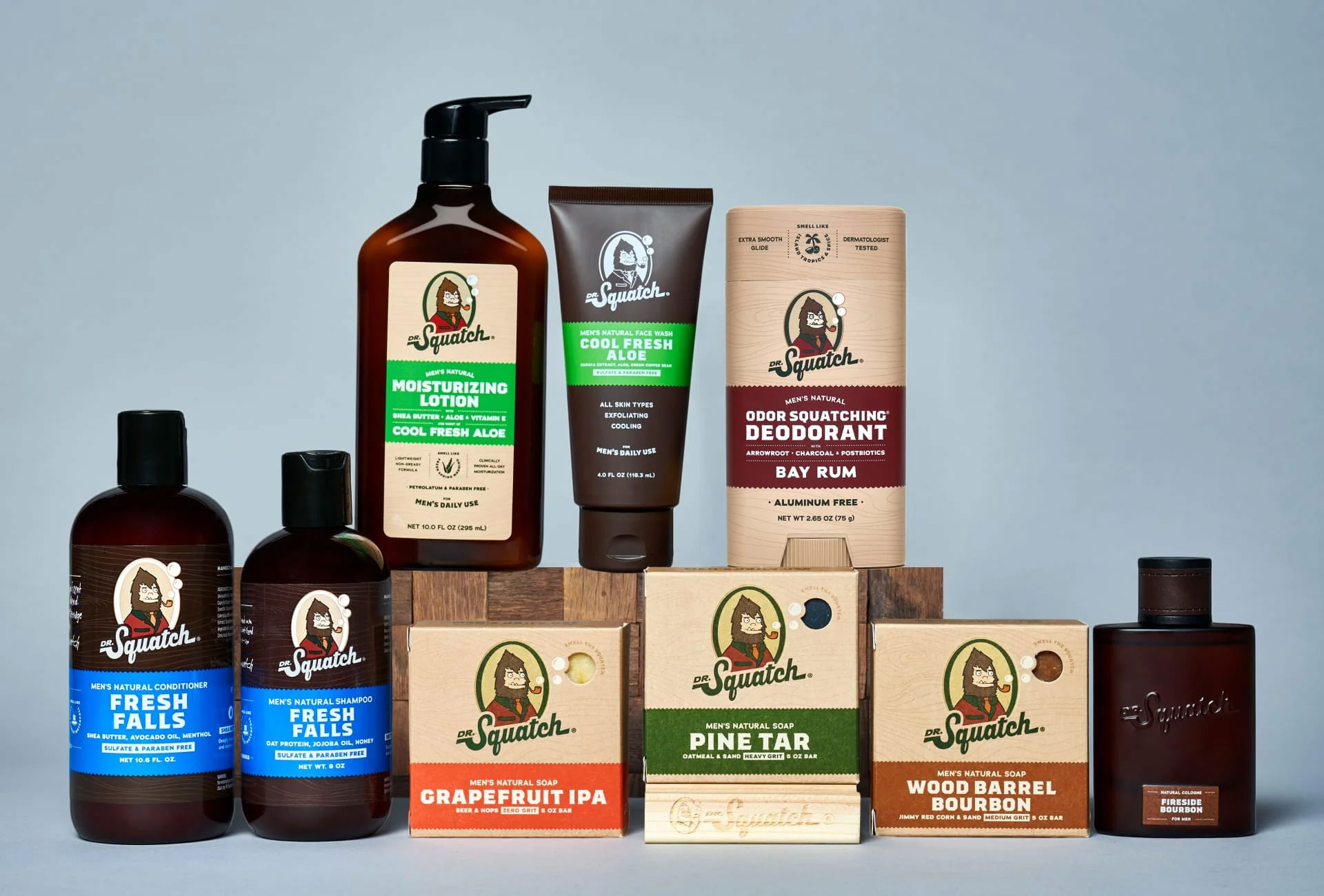
| Dr. Squatch | International expansion plans blocked by lack of global infrastructure and regional expertise | Deployed across J&J’s UK, Netherlands, and Australia centres for true global reach | Dramatically improved service and reduced shipping costs to international markets | “J&J’s regional expertise has helped us improve service and reduce shipping costs exponentially to areas in which we were struggling.” – Jason Welsh, Senior Fulfilment Manager |
A Step-by-Step Process For Switching 3PL
Transitioning between fulfilment providers carries its fair share of nuances, but nothing that can’t be overcome with brilliant planning, and the expertise built over hundreds of successful implementations certainly helps!
There are two parallel integration streams: the digital side and the physical side. A smooth transition means managing both sides of the equation efficiently.
Creating Your Implementation Schedule
Switching 3PL should be a considered process, not rushed. With that said, it’s often possible to bend implementation around your existing fulfilment responsibilities and processes so you don’t miss a beat.
Here’s an example schedule:
- Weeks 1-2: Finalise provider selection and contractual agreements
- Week 3: Develop integration strategy and inventory transfer logistics
- Weeks 4-5: Implement technical connections and conduct thorough testing
- Weeks 6-7: Migrate stock whilst maintaining dual operations
- Week 8: Finalise changeover and optimise workflows
The timeline is ultimately variable. We’ve got some businesses up and running in just a few days, while others benefit from a carefully designed phased switch-over. Here are a few other things you may want to consider when planning the switch:
- Seasonal awareness: Avoid switching during holiday periods, such as Black Friday or major sales events. When possible, plan transitions when you have good bandwidth.
- Marketing coordination: Ensure product campaigns and launches have reliable backend support. Major promotional campaigns or new product launches create sudden spikes in order volume that require stable, tested fulfilment processes.
- Resource allocation: Dedicate sufficient leadership focus and management attention to the project. Successful transitions require significant time investment from senior team members who understand your business operations, customer expectations, and technical requirements.
Digital Integration: Connecting Your Systems
Technical implementation demands synchronisation across multiple platforms – your eCommerce systems, inventory management software, customer service tools, and accounting platforms must simultaneously redirect to your new fulfilment partner.
Digital implementation encompasses:
- API connections: Linking your sales channels directly to our fulfilment systems so orders flow automatically without manual intervention
- Platform integrations: Connecting Shopify, Amazon, eBay, WooCommerce, and other eCommerce platforms to sync seamlessly with our warehouse operations
- Inventory data migration: Transferring your complete product catalogue, stock levels, and SKU information accurately across all sales channels
- Order routing configuration: Setting up automatic rules so new orders get directed to the most appropriate warehouse based on location and stock availability
- Real-time synchronisation: Ensuring inventory updates instantly across all your sales channels when products are sold, received, or moved
- Testing protocols: Running small batches of live orders through the new system to verify everything works correctly before full activation
- Staff training: Teaching your team how to use the new reporting dashboards, order management tools, and customer service interfaces
Our integration team has perfected this process over the years, making it refreshingly straightforward.
Physical Transfer: Moving Your Inventory
Here are the core steps to physically moving your inventory:
- Inventory auditing: Cataloguing current stock levels and identifying transfer priorities. This involves creating a complete manifest of what you have and which products are essential throughout the transition.
- Goods-in processing: Where items get checked, weighed, measured, and photographed. Every product is verified for condition and dimensions, and visual records are created for quality control.
- System integration: Logging all products into new warehouse management systems with barcode scanning. Each item receives a unique tracking code that connects to your sales channels for real-time inventory updates.
- Strategic phasing: Moving slower-selling items first whilst preserving bestseller availability. This ensures your most important products remain accessible whilst testing new processes with lower-risk inventory.
- Quality verification: Ensuring all items meet customer-ready standards before storage.
- Storage optimisation: Placing products in cost-effective warehouse locations. Fast-moving items are positioned for quick access, while slower-moving inventory utilises less premium storage areas.
How J&J Makes Switching 3PL Simple
We’ve managed hundreds of these transitions, which means we’ve seen almost every way things can go wrong and developed processes to prevent them. While each business presents its own unique characteristics, we usually find our clients are pleasantly surprised by how easy the switch really is.
Our team helps coordinate everything on both the physical and digital side of switching. We support you through the technical integration, help manage inventory transfers, and test systems before going live.
The switching process itself can be adapted to your schedule:
- Flexible timeline that works around your business calendar
- Gradual transition options, where you test with partial volume first
- Emergency switches when current providers fail catastrophically
- Proven integration templates for major eCommerce platforms
- Dedicated support throughout the first weeks
The relationship doesn’t end when orders start shipping. We monitor performance during the first weeks, provide regular reviews, and look for optimisation opportunities to accelerate your growth, no matter how ambitious your goals are.
If you recognise your situation in any of these scenarios, it’s worth having a conversation about what switching could mean for your business.
Contact our team for a straightforward discussion about your fulfilment challenges and to start switching to a 3PL that will support you and your business.
About the Author